

If you’ve followed my journey through the icy silence of Antarctica or the sustainable gardens of Dove Park, you’ll know I’m a firm believer that sustainability isn’t a destination – it’s a series of deliberate, conscious choices.
Usually, I’m talking about the choices we make in the supermarket aisle or when picking a carbon-neutral expedition ship! But today, after reading a surprising article in the Guardian, I’m looking at a very different kind of “vessel” – the Formula 1 car.
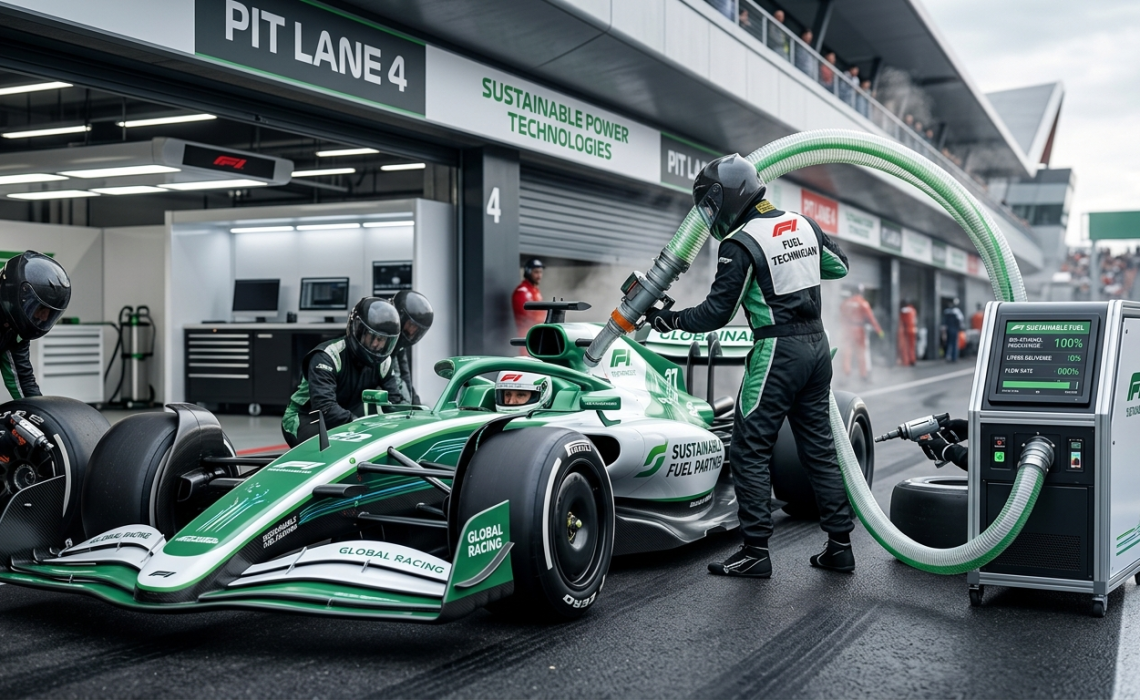
For years, the roar of an F1 engine was synonymous with fossil fuels. But as we start the 2026 season, the sport is shifting gears in a way that truly warms my eco-conscious heart – I have always been an F1 fan but now I can remove some of the guilt around that! The FIA has laid down a challenge that is as technical as it is vital: every single car must run on 100% certified sustainable fuel.
Check out this round up from The Guardian about all the new regulations and scroll down to the ‘Fully Sustainable Fuel’ section HERE
What’s in the “Juice”?
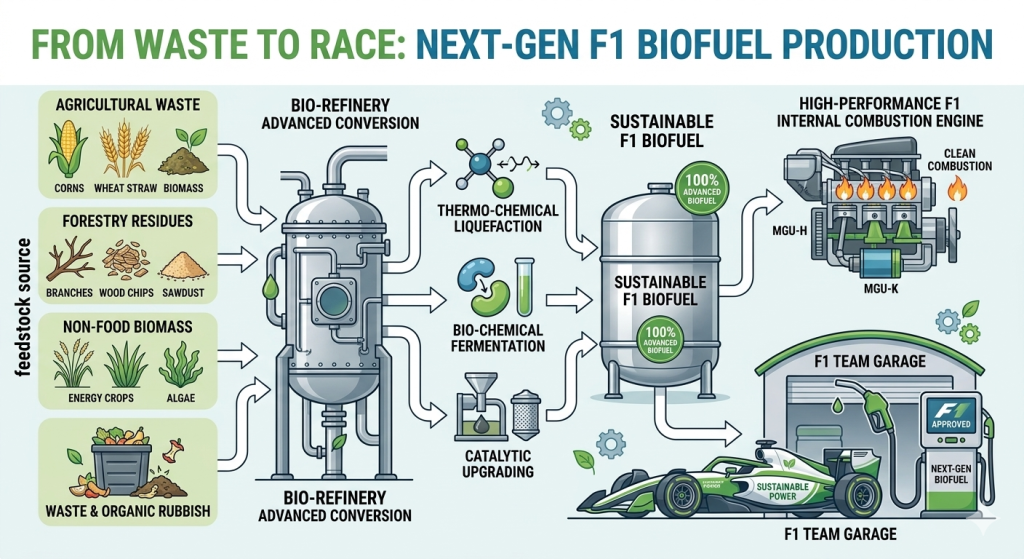
This isn’t just about a “green” sticker on the side of a car. These are advanced sustainable fuels created through two fascinating paths:
- Synthetic “E-Fuels”: Imagine capturing carbon monoxide and combining it with sustainably sourced hydrogen gas. It’s almost like pulling fuel out of thin air, creating a closed loop that doesn’t add new carbon to our atmosphere.
- Next-Gen Biofuels: This is where it gets really important for the planet. Unlike early biofuels that competed with food crops, these must be derived from “non-food” biomass or waste products. We’re talking about things that would otherwise end up in a landfill, ensuring there is zero impact on the global food chain.
A Growing Green Streak
While the 100% sustainable goal for 2026 is the “Grand Prize,” F1 didn’t just start this race yesterday. The FIA actually began the transition back in 2022 when they introduced E10 fuel – a blend of 90% fossil fuels and 10% renewable ethanol. It was a vital first step, but the leap from 10% to 100% is where the real magic (and the heavy-duty science) happens. Interestingly, the feeder series – Formula 2 and Formula 3 – have been the “scouts” in this mission; they’ve been testing high-percentage sustainable blends since 2023 to ensure that when the big teams made the switch in 2026, the technology is already “podium-ready.”

Every Click Counts: Fueling a Greener Future, One Story at a Time. Our planet whispers a plea for change, every day. Every small step we take – from reusable bags to conscious consumption – ripples outwards, creating a wave of hope. Let’s rewrite the story of our planet, one click at a time. Join me in making a difference. I believe in the power of storytelling. By sharing inspiring environmental initiatives and practical tips, I aim to amplify the voices making a difference. Imagine a world where everyone is empowered to take action, one small change at a time. Together, we can create that reality. Your support is more than just a donation. By clicking the “Donate” button (top right corner), you become a partner in this mission. Your contribution fuels this platform, allowing me to share even more impactful stories and empower a global community.
Why It Matters for Us
You might wonder why a travel and environment blogger is geeking out over racing fuel. It’s because F1 is a global testbed. The innovations they perfect on the track today often find their way into our daily lives tomorrow.
With over a billion internal combustion engines still on the road globally, we need “drop-in” solutions that don’t require everyone to buy a new car overnight. If these fuel manufacturers can find that “extra bang per buck” from sustainable sources, it proves that we don’t have to choose between performance and the planet.
“Sustainability is about finding the joy in life without leaving a scar on the earth. If we can race at 200mph without fossil fuels, what’s our excuse for the school run?”
The Technical Battleground
This isn’t just a rule change; it’s a development war. Each manufacturer is currently in the lab, trying to brew the perfect blend that offers the most energy density. It’s a silent, molecular battle that could decide who stands on the podium in 2026.
It reminds me so much of the work done by the South Georgia Heritage Trust – it takes a small, dedicated group of people with a massive vision to reverse human damage. In F1, that vision is a Net Zero future by 2030, and this fuel is the heart of that mission.
What do you think? Does seeing high-performance sports go green give you more hope for our own sustainable transition?
Glossary of Green Racing 🏎️🌱
If you’re new to the “paddock” of sustainability, here are a few terms you might hear the F1 commentators toss around:
- E10 Fuel: The current standard in F1 (since 2022), consisting of 90% fossil fuel and 10% renewable ethanol.
- Drop-in Fuel: A sustainable fuel designed to work in existing internal combustion engines without needing any mechanical modifications. (This is the “holy grail” for road cars!)
- Carbon Neutral: When the amount of CO2 released during the burning of the fuel is exactly equal to the amount of CO2 captured or absorbed during its production.
- Net Zero 2030: Formula 1’s ambitious goal to have a net-zero carbon footprint as a whole sport – from the cars on track to the logistics of flying the gear around the world.
- Non-Food Biomass: Organic materials like agricultural waste (think husks and stalks) or community-derived waste that aren’t part of the human food chain.