

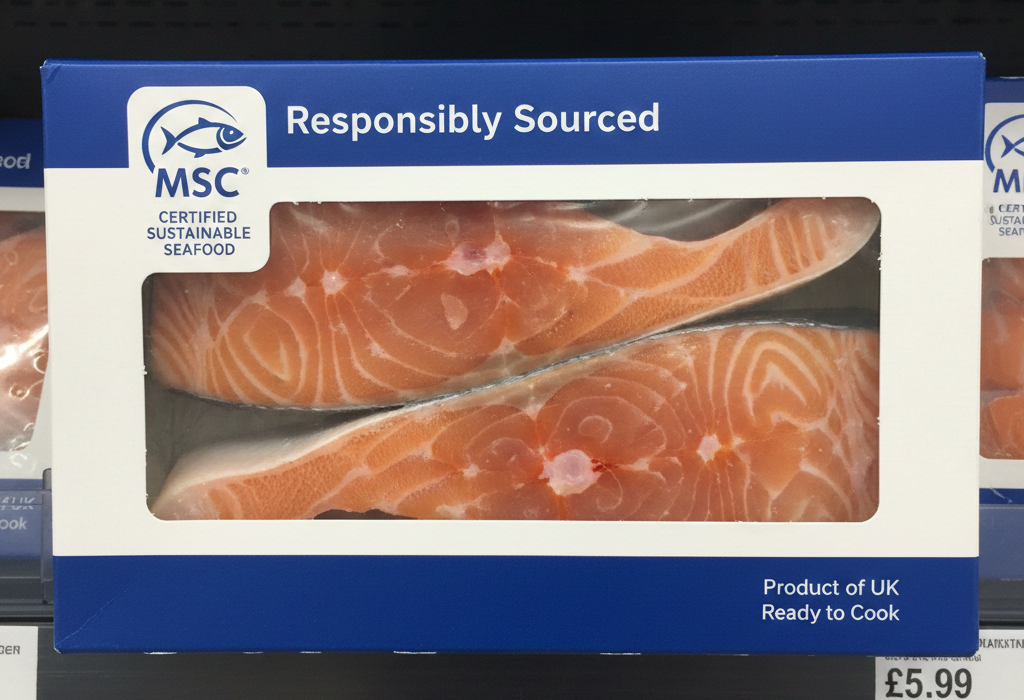
Chatting to my friend Rosie Deegan, Elouise Makes (sustainable, ethical jewellery), about salmon – wild or farmed, which to buy for our own health and that of the planets? Well we were both confused! Step into any UK supermarket, and you’re faced with a dizzying array of logos, labels, and claims, especially when it comes to fish and meat. What do they all mean? Can you really trust them?
There is a LOT of information on this topic, so this a two-parter. This guide break’s down the key sustainability marks you’ll encounter, explains their reliability offering practical tips for conscious shopping. Part 2: a Shoppers Pocket Guide with a list of ‘sustainable swaps’.
How Best to Shop for a Healthy Planet
Navigating the labels is a great start, but let’s kick off with some broader strategies for more sustainable meat and fish consumption:
- Eat Less, Better Quality Meat: This is arguably the most impactful change. Reducing your overall meat consumption, particularly red meat, dramatically lowers your carbon footprint. When you do eat meat, opt for higher welfare, organically reared, or local options where you can trust the practices.
- Embrace Plant-Based Meals: Incorporate more vegetarian and vegan meals into your diet. Legumes, grains, vegetables, and plant-based protein alternatives have a significantly lower environmental impact.
- Choose Sustainable Fish: Always look for MSC or ASC certified fish. If these aren’t available, check guides from organisations like the Marine Conservation Society (MCS) which provide detailed information on specific species and their sustainability ratings. Avoid species that are known to be overfished (e.g., some types of cod, tuna, or wild salmon without certification).
- Buy Local and Seasonal: Sourcing meat and fish directly from local farmers’ markets or butchers can reduce food miles and often supports more traditional, less intensive farming methods. Seasonal produce also generally has a lower footprint.
- Consider the “Forgotten” Cuts and Species: For meat, explore less popular cuts that are often cheaper and more sustainable as they utilise the whole animal. For fish, ask your fishmonger about less common, locally abundant species that are under less fishing pressure.
- Reduce Food Waste: Every bit of food wasted represents wasted resources, from water and land to energy. Plan your meals, store food properly, and get creative with leftovers. See some of my previous posts for lots of tips and ideas.
- Look Beyond the Label (Where Possible): Engage with your local butcher or fishmonger. They can often provide detailed information about the origin of their products and their farming/fishing practices, offering transparency that labels alone can’t always convey.
Understanding the Marks: Fish
The world’s oceans are under immense pressure, making sustainable fish choices crucial. Here are the main labels to look out for.
None of them are perfect! It’s perhaps best viewed as a ‘better’ choice rather than a ‘perfect’ choice.
1. MSC (Marine Stewardship Council) Certified
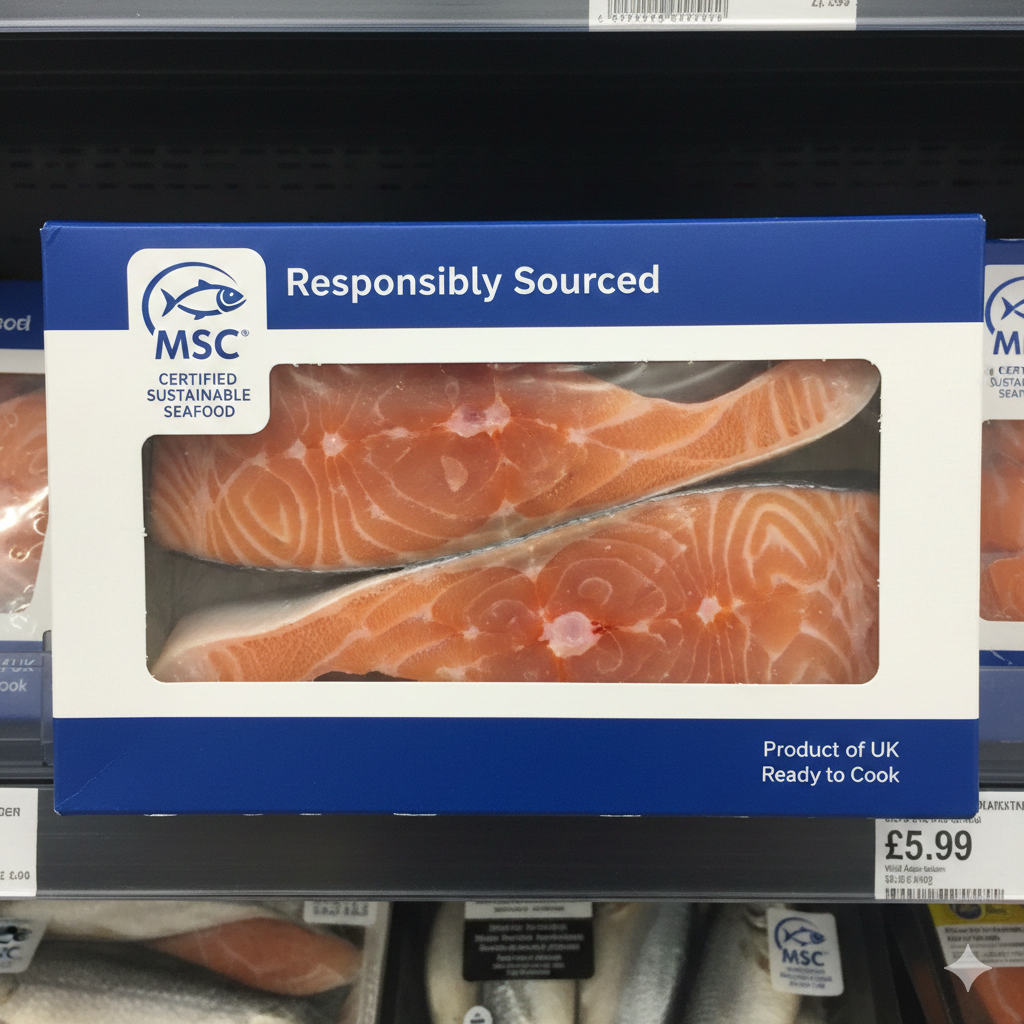
What it means: This blue tick with a fish logo indicates that the fish comes from a fishery that has been independently assessed against the MSC’s science-based standards for sustainable fishing. This includes ensuring healthy fish stocks, minimising environmental impact, and effective management.
Reliability: It’s the world’s most recognised seafood eco label, but over recent years critics have argued that some certifications allow for unsustainable practices, especially high bycatch. And they want stricter standards. This is true too for some large-scale industrial fishers that have been certified but are considered as damaging seabeds and local ecosystems. It’s the best we have at the moment and while no system is perfect, MSC provides some assurance of sustainability for wild-caught seafood. They review their standards every 5 years with the last comprehensive review taking place in 2022.
Further research brought up some articles around the controversy, but they are somewhat dated:
2. ASC (Aquaculture Stewardship Council) Certified
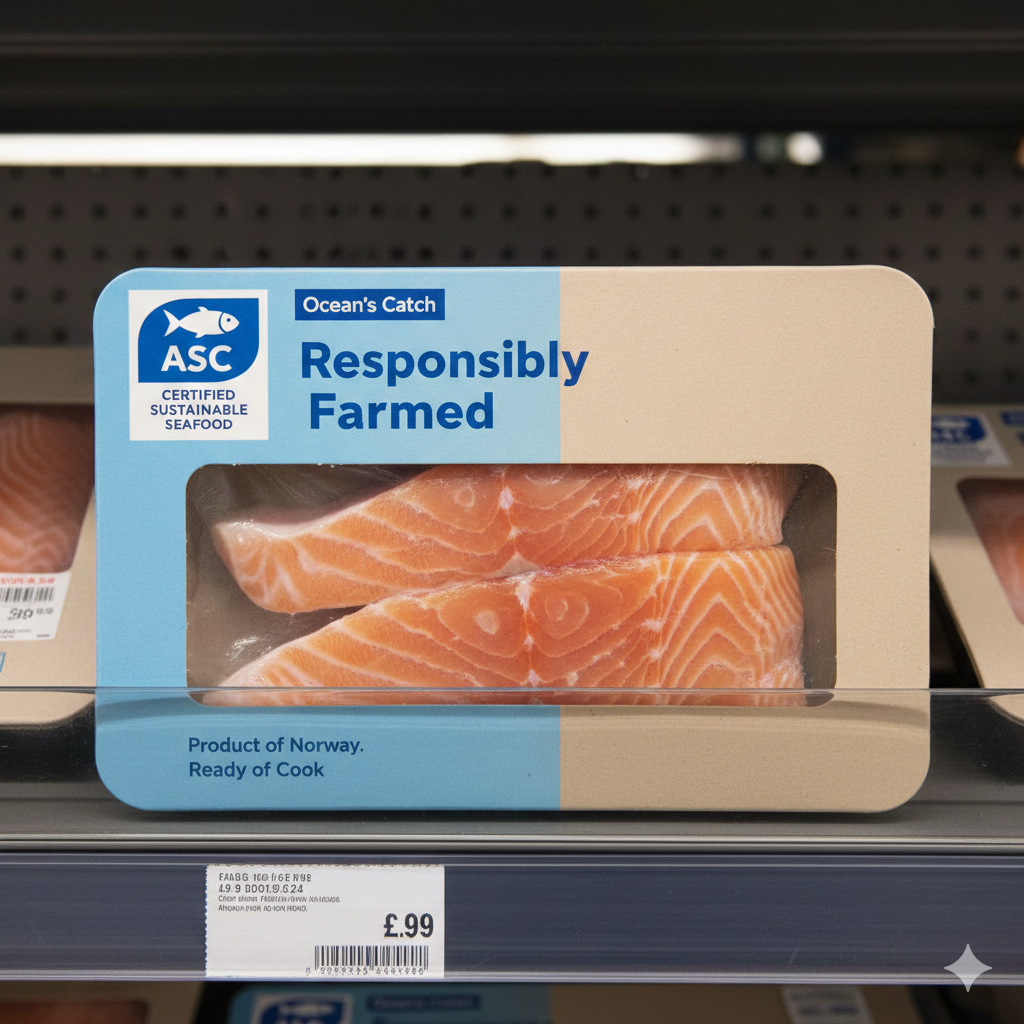
What it means: Similar to MSC, but for farmed fish. The ASC logo (a fish in a circle with “ASC” below it) signifies that the fish has been farmed in a way that minimises environmental and social impacts. This includes responsible use of antibiotics, water quality, feed sustainability, and worker welfare.
Reliability: ASC is the leading global certification for responsibly farmed seafood. Their standards are comprehensive and address many of the concerns associated with aquaculture, such as pollution and disease management. That being said, it also has been accused of ‘watering down’ its standards to accommodate industry practices and has failed to enforce salmon farms exceeding lice limits, so they keep their certifications! Some producers have paused their ASC certification.
The use of Antarctic krill as a “performance” ingredient in salmon feed is a classic case of efficiency vs. ethics. While it boosts salmon growth, harvesting this keystone species threatens the entire Southern Ocean food web—contributing to a 30% decline in some penguin populations (Chinstraps and Adelies) and disrupting a carbon sink that sequesters 20 million tonnes of carbon annually.
With the 2025 fishing season hitting critical “trigger level” shutdowns due to localised depletion, the ecological cost of farmed salmon is becoming harder to justify. Fortunately, alternatives exist; retailers like Tesco may carry salmon from producers like Lerøy Seafood, who are swapping krill for sustainable microalgae oil – I searched online at Tesco but couldn’t find it but have a look in your local stores. I gave up eating salmon some years ago and get my Omega 3’s with Algae supplements, flax and hemp seeds. What will you do?
3. RSPCA Assured (Fish)
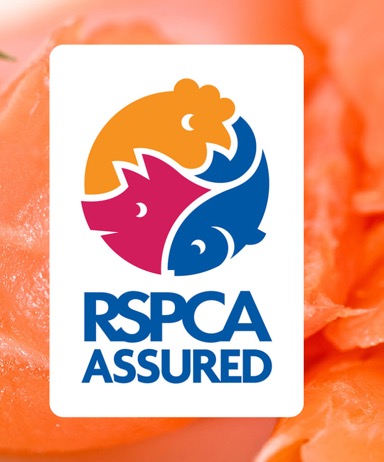
What it means: While primarily known for animal welfare in land animals, RSPCA Assured also certifies farmed fish, mainly farmed salmon and trout with 70% of Scottish Salmon certified under this scheme. The label (a blue and yellow circle with “RSPCA Assured” and a bird logo) indicates that the fish have been reared to the RSPCA’s higher welfare standards, including considerations for water quality, space, and handling.
Reliability: Good for welfare. While not a direct sustainability mark in terms of wild fish stocks or broader ecosystem impact, it ensures higher welfare standards for farmed fish, which is an important ethical and often environmental consideration. There have been concerns raised about this arm of the RSPCA but they seem to more generally about the sustainability of open-net salmon farming which some consider is highly intensive, polluting and environmentally damaging as an operation. The organisation Wildfish have recently asked the Charity Commission to investigate – read that HERE.
Understanding the Marks: Meat
The environmental impact of meat production varies significantly. These labels help you make more informed choices:
1. Organic (e.g., EU Organic Leaf, Soil Association)
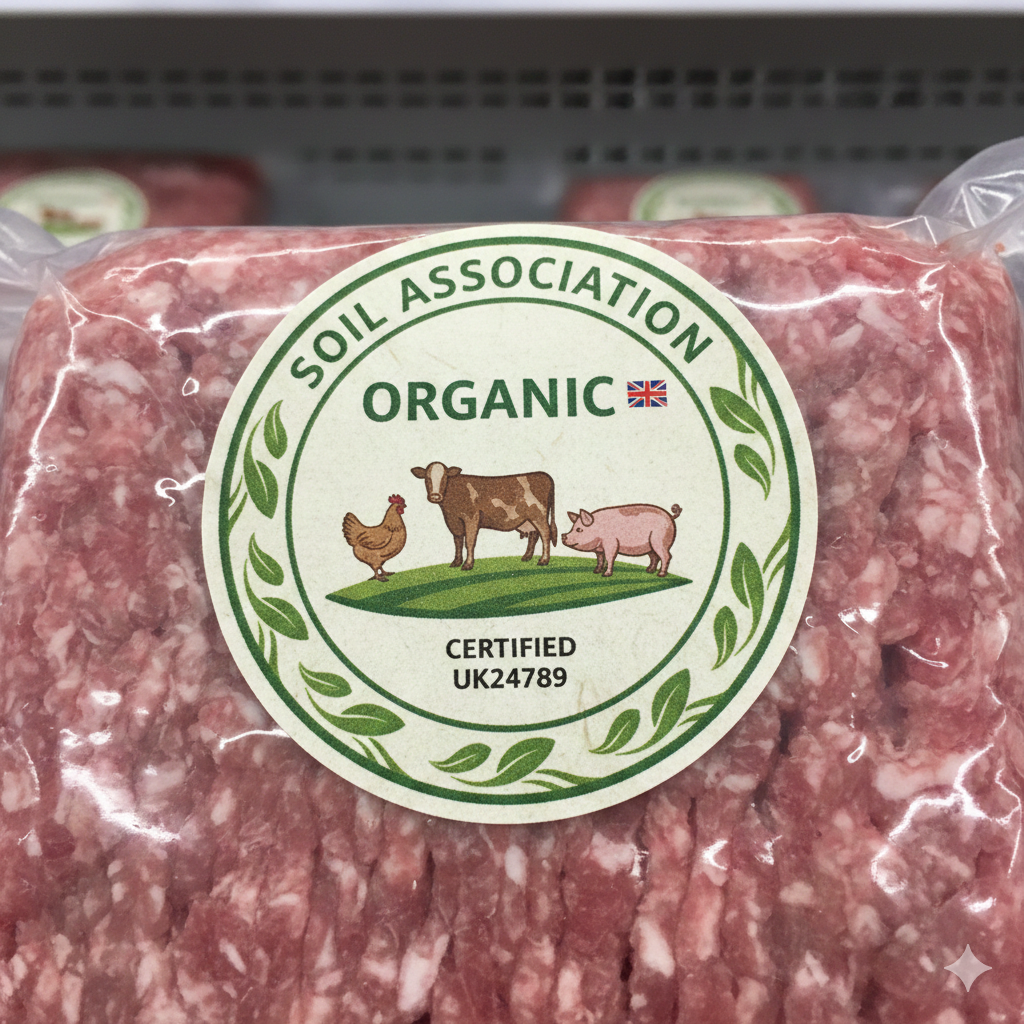
What it means: The EU Organic leaf (a green rectangle with a leaf made of stars) or the Soil Association logo (a brown and green circle with “Soil Association Organic”) signifies that the meat has been produced without synthetic pesticides, herbicides, or GMOs. Animals are typically raised with higher welfare standards, outdoor access, and fed organic feed.
Reliability: Good for specific environmental benefits and animal welfare. Organic farming methods generally promote biodiversity, soil health, and reduce chemical pollution. However, “organic” doesn’t necessarily mean lower carbon emissions from the animal itself (e.g., a conventionally farmed chicken may have a lower carbon footprint than an organically reared beef cow due to species differences).
2. RSPCA Assured (Meat)
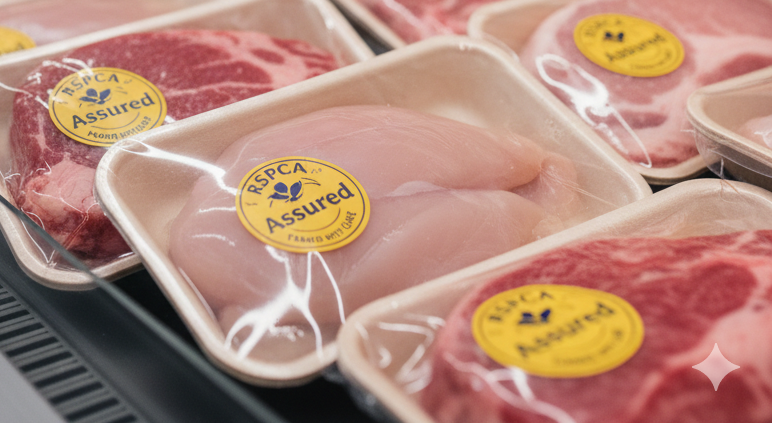
What it means: As with fish, the RSPCA Assured logo on meat indicates that the animals (pigs, chickens, cattle, etc.) have been reared to the RSPCA’s higher welfare standards. This typically means more space, better living conditions, and careful handling.
Reliability: Highly reliable for animal welfare. While not a direct measure of broader environmental sustainability (like carbon footprint), better animal welfare often correlates with more extensive, less intensive farming practices, which can have indirect environmental benefits.
3. Red Tractor Assurance
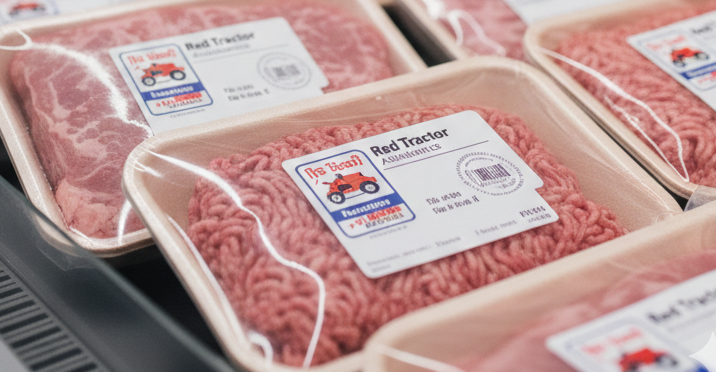
What it means: The Red Tractor logo (a red tractor in a blue circle) is a UK-specific standard that guarantees food is safely produced, comes from British farms, and meets certain environmental and animal welfare standards. It covers traceability from farm to pack.
Reliability: Good for British sourcing and basic standards. Red Tractor provides a baseline assurance of food safety, hygiene, and some animal welfare. However, its standards are generally considered less stringent than organic or RSPCA Assured for welfare and specific environmental impacts like biodiversity. It’s a good starting point for ensuring British origin and accountable production.
4. Free Range (Poultry/Eggs)
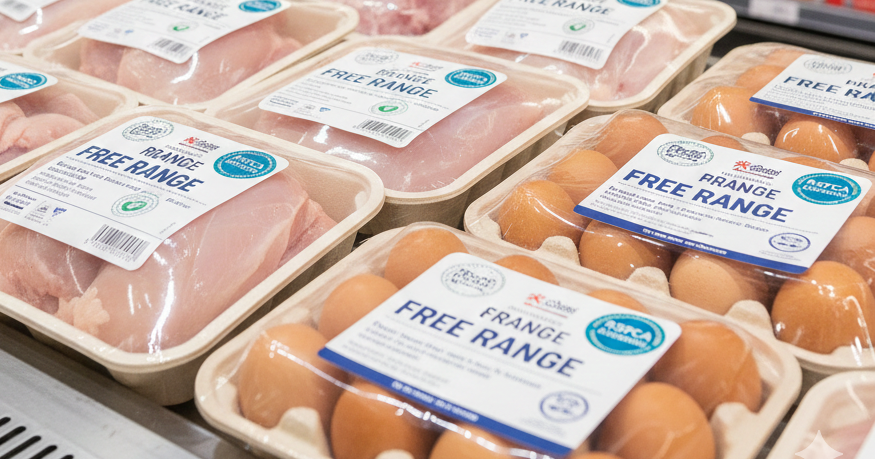
What it means: For poultry and eggs, “free range” means the birds have continuous daytime access to outdoor runs. This is a legal definition with specific requirements for space and access.
Reliability: Good for welfare. Free-range farming significantly improves the welfare of poultry compared to caged or barn-reared systems. Environmentally, it can reduce some impacts of intensive farming, but it’s not a comprehensive sustainability certification.

Every Click Counts: Fueling a Greener Future, One Story at a Time. Our planet whispers a plea for change, every day. Every small step we take – from reusable bags to conscious consumption – ripples outwards, creating a wave of hope. Let’s rewrite the story of our planet, one click at a time. Join me in making a difference. I believe in the power of storytelling. By sharing inspiring environmental initiatives and practical tips, I aim to amplify the voices making a difference. Imagine a world where everyone is empowered to take action, one small change at a time. Together, we can create that reality. Your support is more than just a donation. By clicking the “Donate” button (top right corner), you become a partner in this mission. Your contribution fuels this platform, allowing me to share even more impactful stories and empower a global community.
We all want to do our bit for the planet, and choosing sustainable food is a big part of that. By understanding these certifications and adopting conscious shopping habits, you can start make a difference in promoting a healthier planet, one plate at a time.
Choosing sustainable food is a journey, and having the right tools makes it much easier. Below are the direct links to the relevant pages for each of the organisations mentioned in the guide.
Fish Sustainability
- MSC (Marine Stewardship Council): Information on the blue fish label for wild-caught seafood and where to find certified products in the UK.
- ASC (Aquaculture Stewardship Council): Details on the standards for responsibly farmed seafood.
- MCS Good Fish Guide: An essential tool for checking the sustainability of specific species, even those without a supermarket label.
Meat & Welfare
- RSPCA Assured: Learn about the specific higher welfare standards for both land animals and farmed fish.
- Soil Association (Organic): Deep dives into what “organic” means for livestock, including feed and chemical use.
- Red Tractor Assurance: Details on the standards for British-sourced beef, lamb, poultry, and pork.