

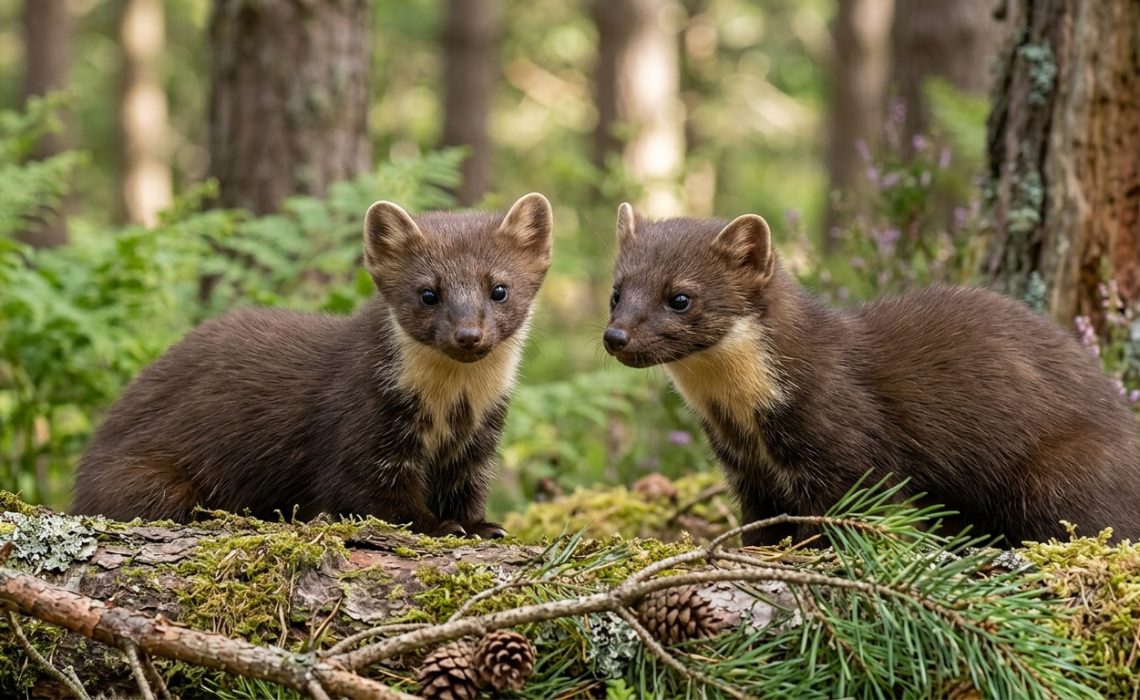
For centuries, Britain’s woodlands and waterways sat strangely quiet. Missing from our native ecosystems were the essential “eco-engineers” and top predators that once shaped the landscape – the tree-climbing pine marten, the elusive Scottish wildcat and the industrious Eurasian beaver. Driven to near or total regional extinction by historical hunting, trapping and habitat fragmentation, these iconic species were lost from much of our countryside.
However, across England, Scotland, and Wales, a quiet revolution is underway. Through pioneering rewilding projects, strategic conservation partnerships and community support, these three key species are returning home – and transforming the British landscape in the process.
1. Nature’s Engineers: The Wild Comeback of the Beaver
Few animals can reshape an ecosystem as rapidly as the Eurasian beaver (Castor fiber). Once hunted to extinction in Britain in the 16th century, beavers have officially returned to wild-living populations in places like Dorset, Devon and my favourite, the Scottish Highlands.
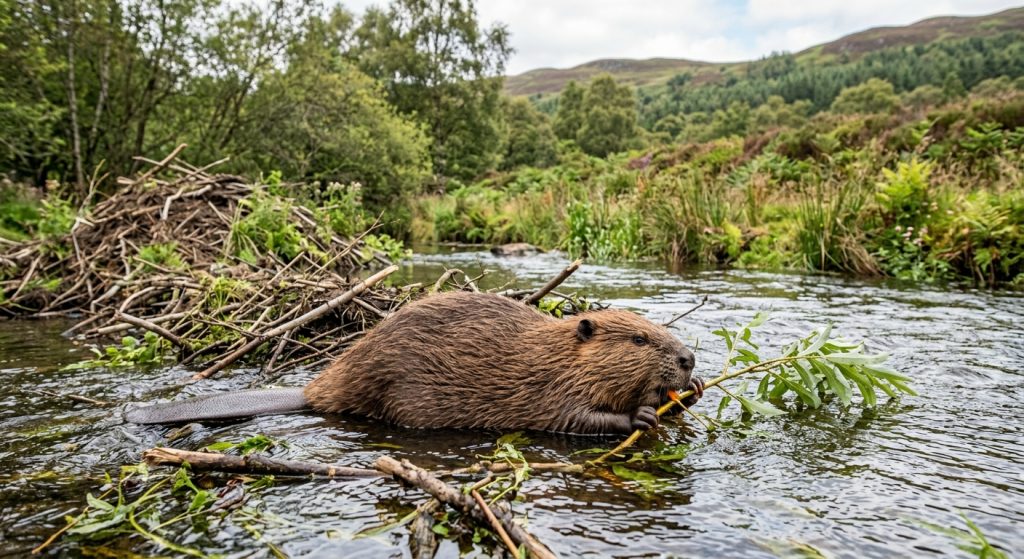
When beavers arrive in a river catchment, they immediately get to work. By building dams, felling trees and creating deep pools, they slow the flow of water.
- Flood & Drought Mitigation: Beaver dams act as natural sponge systems, holding back high waters during heavy rainfall to mitigate downstream flooding while storing vital water during summer droughts.
- Biodiversity Hotspots: In sites like Studland in Dorset, monitoring by the National Trust showed that beaver activity transformed dense woodland into open, light-filled wetlands within just 12 months. This rapid change welcomed back otters, water rails, barn owls and rare aquatic insects.
2. The Forest Guardians: Pine Martens Bounce Back
Cat-sized, nimble, terribly cute and intensely curious, the pine marten (Martes martes) was once critically endangered across England and Wales, remaining largely confined to remote parts of Scotland. Today, evidence shows these acrobatic woodland hunters are making a dramatic recovery across Britain.
Projects like the Two Moors Pine Marten Project have successfully reintroduced pine martens into Dartmoor and Exmoor. In 2026, conservationists celebrated key milestones, capturing camera trap footage of wild-born kits on both Dartmoor and Exmoor – proving that these reintroduced populations are taking hold and breeding successfully.
Pine martens play a critical ecological role as mesopredators, (ok, I had to look that up, so here is the definition: a mid-ranking predator in a food web that preys on smaller animals while serving as prey for larger, apex predators).
- Restoring Balance: Studies demonstrate that where pine martens establish themselves, they help regulate local ecosystems. Notably, they naturally suppress invasive American grey squirrel populations, which gives native red squirrels a fighting chance to reclaim their historic territories. I remember a time when I was young, walking through Regents Park in London and seeing a red squirrel! Hoping they will return.
3. The Highland Tiger: Wildcats Breeding in the Wild
Dubbed the “Highland Tiger,” the Scottish wildcat (Felis silvestris) is one of the UK’s most threatened native mammals, pushed to the brink of extinction by habitat loss and cross-breeding with feral domestic cats.
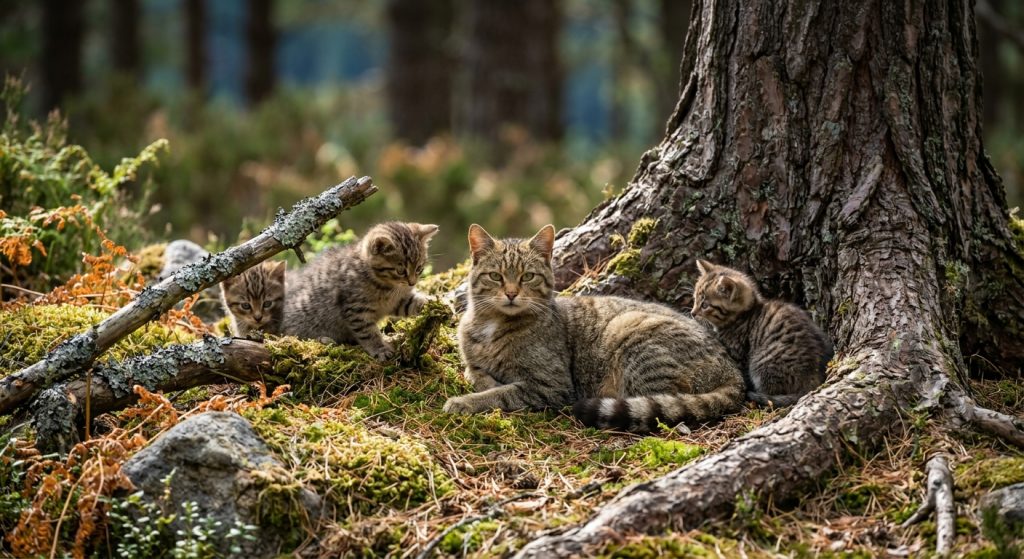
Led by the Royal Zoological Society of Scotland (RZSS), the Saving Wildcats project has achieved unprecedented success in the Cairngorms National Park.
- Generational Success: Following initial releases, field teams confirmed wild-born kittens in the Cairngorms for three consecutive years. GPS tracking and trail cameras revealed released females hunting, finding wild mates and raising litters entirely without human assistance. Worth a future trip to see if we can spot these.
- Genetic Health: Ongoing releases continue to bolster the wild population, ensuring genetic diversity and rebuilding a resilient top predator in Scotland’s wild spaces.

MY SUSTAINABILITY DEFINITION: MEETING TODAY’S NEEDS WITHOUT RUINING TOMORROW. Support the Stories: I truly believe that sharing these stories helps keep us all connected and inspired to do better by our planet. If you enjoy reading my articles and want to help keep this platform running, please consider clicking the “Sponsor My Writing” button in the top right corner. As a little extra thank you, anyone based in the UK who sponsors £10 or more will get a penguin coaster or two sent right to their door! Your support means the world and directly fuels the next article.
What This Means for the Future of British Conservation
The return of these three species marks a fundamental shift in how we approach the environment. Rather than simply managing landscapes, rewilding focuses on restoring the ecological processes that allow nature to manage itself.
Science shows that southern England and Wales aren’t lost causes for nature – large parts of the landscape are ready and suitable for bringing back native wildlife right now. Studies were published in Landscape Ecology (a peer-reviewed scientific journal) showing that large areas of England and Wales – from the Southwest to the Southeast – offer ideal conditions for native wildlife to thrive once again.
How You Can Support Native Species Restoration:
- Become a Citizen Scientist: Report sightings of pine martens or water species to local Wildlife Trusts or project initiatives.
- Create Wildlife Corridors: Support local green spaces, plant native trees, and avoid harsh chemical pesticides in your garden to help reconnect fragmented habitats.
- Back Landscape-Scale Conservation: Support organisations such as the Beaver Trust, Wildlife Trusts, National Trust and RZSS who are on the ground making these wild returns possible.Ecological Restoration Fund
References & Further Reading:
- Devon Wildlife Trust / Two Moors Project: Pine martens ‘doing well’ after South West releases
- National Trust: https://www.nationaltrust.org.uk/visit/dorset/studland-bay/re-introducing-beavers-to-studland
- The Wildlife Trusts: New study finds large areas of Britain could support the return of pine martens
- Ecological Restoration Fund / Beaver Trust: Beavers Return to the Wild: A Landmark Step for England’s Waterways
- Royal Zoological Society of Scotland (RZSS): Saving Wildcats: Wild kittens born to released females