

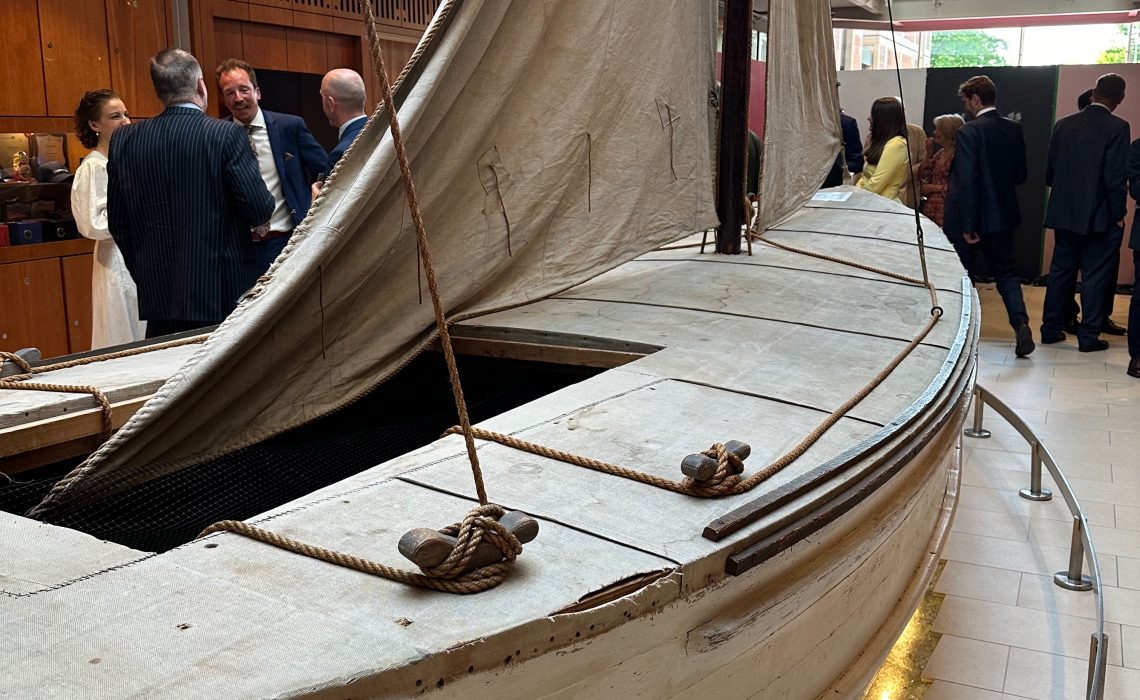
Most of us know the “Endurance” story’s climax: Sir Ernest Shackleton and five companions navigating 800 miles of the world’s most violent ocean in a tiny 23-foot lifeboat, the James Caird, to reach South Georgia. But what happened to that sturdy little boat once it hit the gravel at Cave Cove, King Haakon Bay?
The journey of the James Caird didn’t end with the rescue of Shackleton’s men. With the next James Caird Society dinner, and a reception in front of this plucky boat, coming up soon for me – plus 24th April is the date Shackleton left Elephant Island heading for South Georgia Island – I wanted to explore the story more. Its survival as a physical relic is almost as miraculous as its voyage!
From Desolate Shores to Dulwich Grandeur
Abandoned on a Whaling Shore
After the crew reached South Georgia in 1916, the James Caird was flipped over and provided shelter for the men, who named it ‘Peggotty Camp’. Norwegian whalers retrieved the James Caird bringing it to the Stromness whaling station, as Shackleton focused on rescuing his men on Elephant Island. For years, the boat that saved twenty-eight lives sat weathered and forgotten on the sub-Antarctic shore.
However, the boat’s “near-discarded” phase actually took a bizarre turn once it returned to England in 1919.
The Rescue and the Return to Dulwich
Thankfully, the boat was salvaged and brought back to the UK in 1919. But this seems the most distinctly curious episode in the James Caird’s history!
After its return to London, the idea was put the lifeboat on display to raise both public awareness and funds following the successful rescue of Sir Ernest Shackleton’s ‘endurance’ crew. It had a brief stint in the gardens at the Middlesex Hospital – one has to ask why there! – it then faced the threat of being “cast aside” once more due to a lack of permanent housing. But instead of a museum, the vessel found itself as a high-society curiosity. The boat was hoisted onto the roof of Selfridges department store in central London.
While it provided a spectacular view for shoppers, the roof of a department store was no place for a historic vessel. It was exposed to the London soot and rain, nearly becoming a forgotten footnote in the city’s commercial history rather than a protected monument.
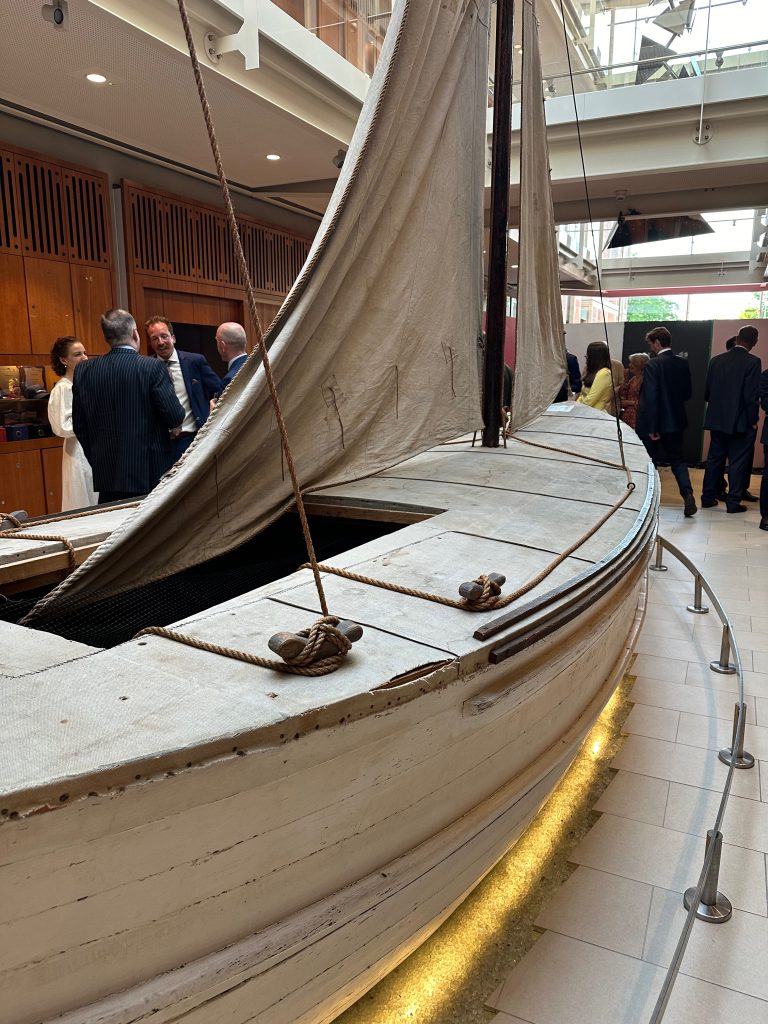
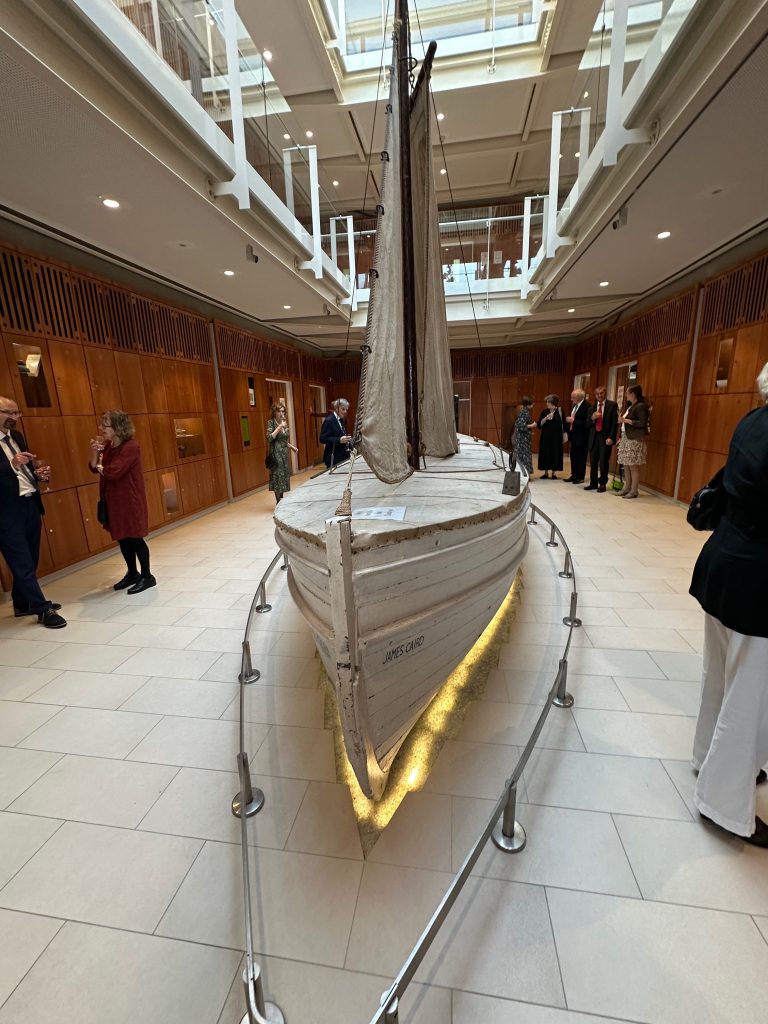
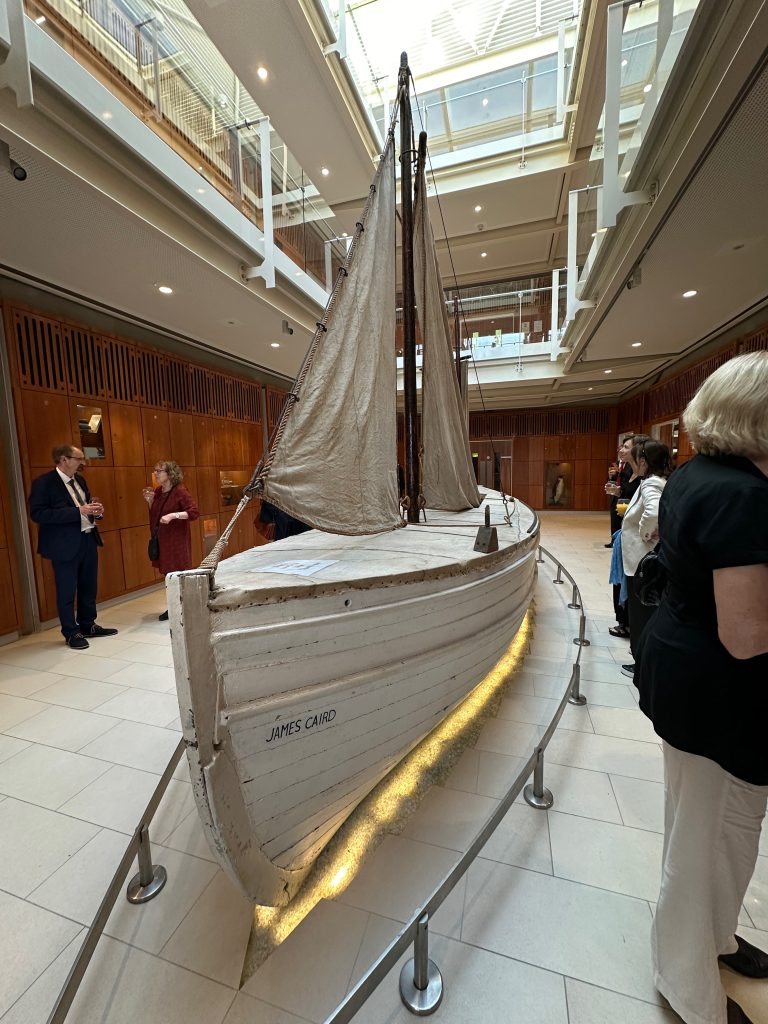
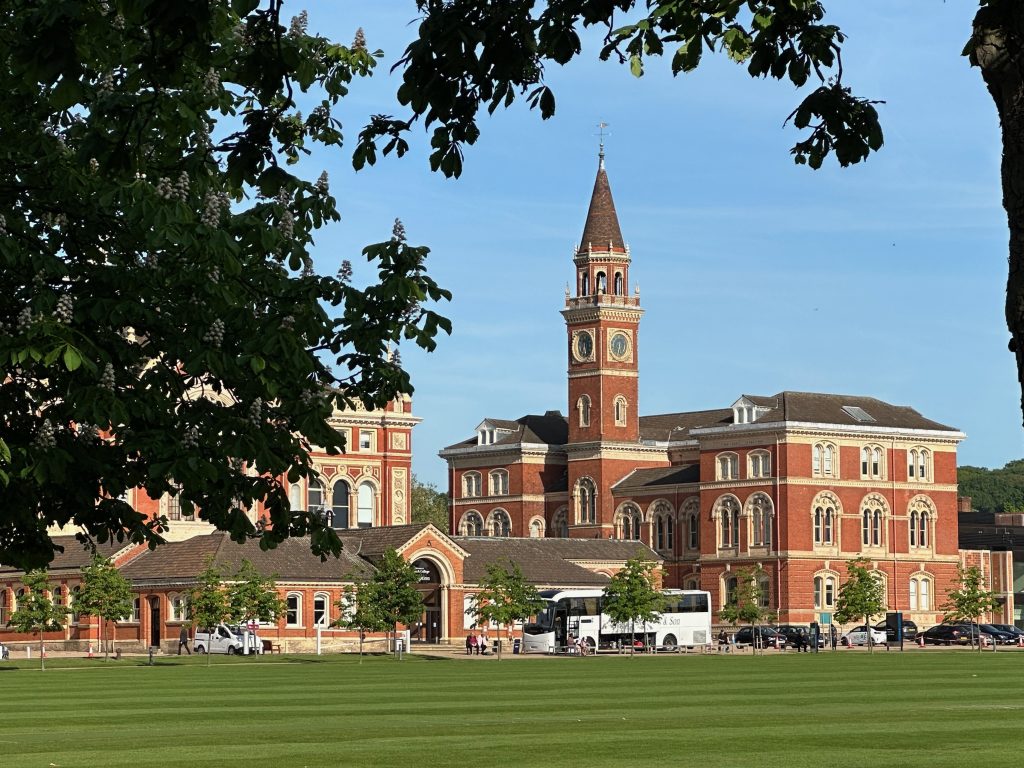
It was John Quiller Rowett, Shackleton’s school friend and the man who financed the Quest expedition, who stepped in. He recognised that the boat belonged at Shackleton’s alma mater. In 1922, the James Caird was gifted to Dulwich College in London, Shackleton’s school prior to joining the Merchant Navy. For decades, it stood on the grounds, sometimes exposed to the elements, until it was eventually moved into the North Cloister and finally into the magnificent Laboratory building where it sits today, a shrine to human endurance.
The James Caird Society: Carrying the Torch
The boat is more than a museum piece; it is the heart of the James Caird Society. Founded to preserve Shackleton’s legacy, the society promotes the “Shackleton Ethos”: leadership, resilience, and the “optimism is true moral courage” philosophy.
Twice a year, the society gathers at Dulwich College for a formal dinner. These events aren’t just for history buffs; they are a gathering of the “Shackleton family”, all those interested in this incredible story.
- The Shackleton Connection: The society is chaired by the Hon. Alexandra Shackleton, Sir Ernest’s granddaughter.
- A Life’s Mission: Alexandra has been instrumental in the modern “rescue” of the boat, spearheading fundraising efforts for its restoration and ensuring its story reaches new generations. Her dedication ensures that the James Caird remains a symbol of hope rather than a dusty relic.
- The Ethos: The society focuses on promoting Shackleton’s core values: optimism, patience, and “moral courage.” These dinners serve as a bridge between the “Heroic Age” of exploration and modern leaders who use Shackleton’s management style as a blueprint for crisis leadership.

Every Click Counts: Fueling a Greener Future, One Story at a Time. Our planet whispers a plea for change, every day. Every small step we take – from reusable bags to conscious consumption – ripples outwards, creating a wave of hope. Let’s rewrite the story of our planet, one click at a time. Join me in making a difference. I believe in the power of storytelling. By sharing inspiring environmental initiatives and practical tips, I aim to amplify the voices making a difference. Imagine a world where everyone is empowered to take action, one small change at a time. Together, we can create that reality. Your support is more than just a donation. By clicking the “Donate” button (top right corner), you become a partner in this mission. Your contribution fuels this platform, allowing me to share even more impactful stories and empower a global community.
Full Circle: The Replica at South Georgia
If you visit South Georgia today, you will see the James Caird once more – or at least, its twin.
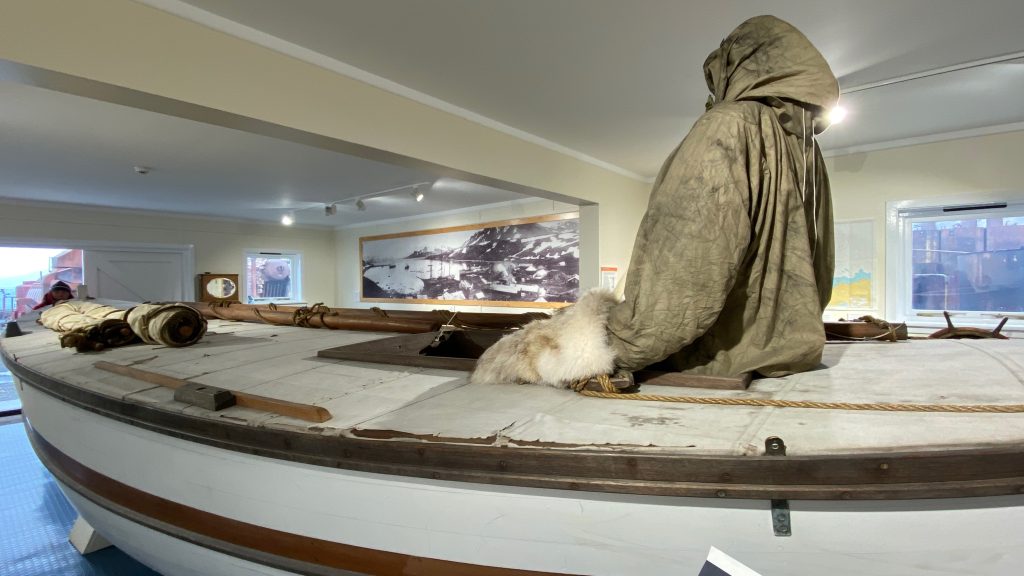
A meticulously crafted replica now resides in the South Georgia Museum at Grytviken. This was a massive undertaking involving the explorer and boat-builder Seb Coulthard. In 2013, Coulthard was part of the “Shackleton Epic” team that recreated the 800-mile voyage using period-accurate gear.
Following the expedition, the replica (named the Alexandra Shackleton) was donated to the island. Its arrival was a logistical feat, requiring the coordination of the British Antarctic Survey and the Government of South Georgia. It stands as a tribute to the original, allowing visitors to stand on the very island where the miracle ended and see exactly how small that vessel really was.
In fact if you visit the South Georgia Heritage Trust website HERE, you can read the full story

Why It Matters
Today, visitors to Dulwich College can stand inches away from the James Caird. You can see the extra layers of planking added by the carpenter “Chippy” McNish and imagine the six men huddled beneath its canvas, whose courage and sheer human will were the only tools against the unforgiving Antarctic wilderness and the remorseless Southern Ocean.
Thanks to Alexandra Shackleton, the James Caird Society, and the efforts of modern explorers like Seb Coulthard, the boat remains a living testament to the idea that no matter how dark the storm, there is always a way home.
“By endurance we conquer.” — The Shackleton family motto.